
The Things No One Sees
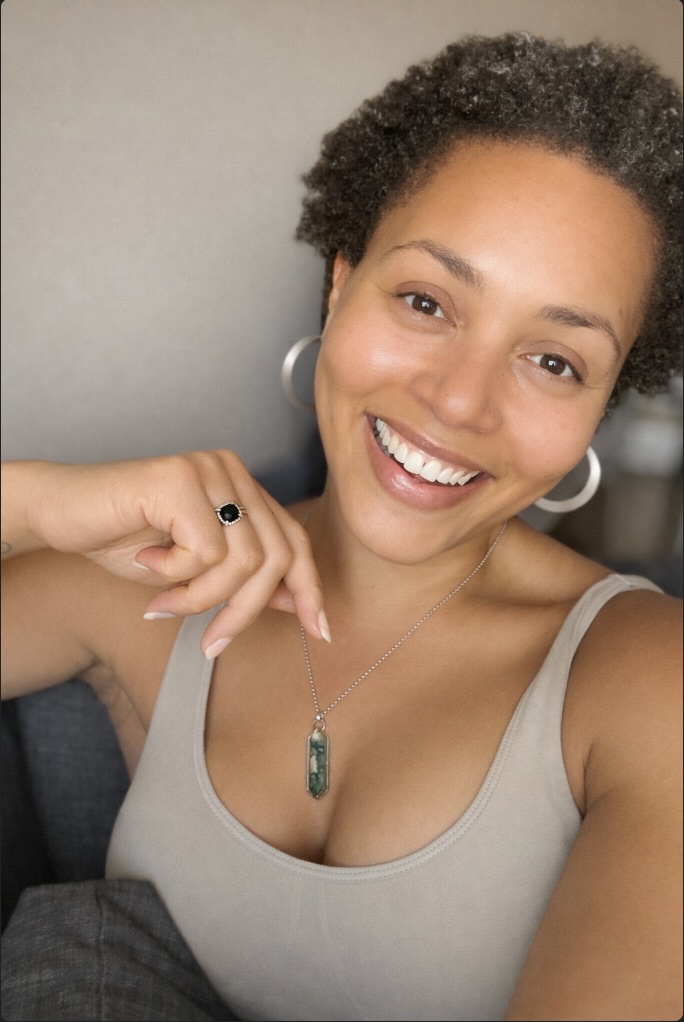

When people hear the words breast cancer, they often think about treatment. They think about chemotherapy, surgery, radiation, scans, and appointments. They think about what happens to the body.
What they don't often think about is what happens underneath it all: the identity shifts, the grief, the fear, the rebuilding.
The things no one can see.
I was 38 years old when I was diagnosed with Stage III breast cancer. I exercised daily. I lifted weights. I ate well. I maintained a healthy weight. I had no genetic mutations associated with breast cancer and no reason to believe I would hear the words, "You have cancer".
Like many women, I believed breast cancer was something that happened later in life, to women with significant risk factors.
I was wrong.
One of the most important lessons I learned is that breast cancer doesn't always follow the rules we think it should. And because of that, young women need to know their bodies. They need to trust themselves. They need to advocate for themselves when something feels off. Because sometimes the first person who notices that something isn't right is you.
But cancer didn't just change my body.
It changed me.
Before cancer, much of my identity was tied to achievement: productivity, being helpful, being dependable, being the person who could handle everything. I was always moving, always doing, always accomplishing.
What I didn't realize at the time was how much of my self-worth had become intertwined with those things.
Cancer forced me to stop. Not metaphorically. Literally.
Suddenly, my job wasn't achieving.
My job was surviving.
I couldn't control the outcome. I couldn't work harder to avoid treatment. I couldn't perfect my way through uncertainty. And for someone who had spent a lifetime believing effort could solve almost anything, that was one of the hardest lessons of all.
The greatest challenge wasn't always the treatment itself. It was grieving versions of myself I could no longer inhabit in the same way: the woman who thought her future would unfold a certain way, the woman who believed time was guaranteed, the woman who thought she could always outwork discomfort and keep moving forward.
Cancer asked me to reconsider who I thought I had to remain. And then it asked me to figure out who I was now.
Treatment ended. Everyone around me breathed a sigh of relief. I did too.
What I didn't realize was that some of the hardest questions were still ahead of me.
Survivorship introduced a different kind of work—one I hadn't been prepared for.
When the appointments became less frequent and life started moving again, I was left with questions no one had prepared me for:
How do I trust my body again? How do I stop waiting for the next scan? How do I explain this experience to people who haven't lived it? Will dating feel different? Will relationships change? Will I ever feel comfortable in my body again?
Who am I now?
There is immense focus on diagnosis and treatment. Far less focus on identity after cancer: returning to work, body image, relationships, fertility concerns, anxiety about recurrence, rebuilding a life after survival.
Many survivors feel pressure to move on before they've had time to process what happened. To be grateful. To be positive. To get back to normal.
But what if normal no longer fits?
That was the realization that changed everything for me.
After treatment ended, I found myself trying to return to the life I had before cancer: the same goals, the same career path, the same pace, the same version of myself.
But something felt off.
Cancer had changed my priorities, my perspective, my relationship with time, and my understanding of what matters. For a long time, I thought something was wrong with me because I couldn't force myself back into the old version.
Now I understand that wasn't failure.
It was growth.
The goal was never to become who I was before. The goal was to discover who I had become.
That's one reason community matters so much.
Being diagnosed young can feel incredibly isolating. You look around and wonder if anyone else understands what you're carrying.
Representation matters because when you see someone who looks like you, is your age, or has walked a similar path, it expands what feels possible. It reminds you that life beyond diagnosis exists. That healing is possible. That joy is possible. That rebuilding is possible.
And that your story isn't over.
That realization is what ultimately led me into advocacy. Not because I set out to become an advocate, but because I experienced the gaps: gaps in information, emotional support, survivorship resources, and conversations about what happens after treatment ends.
If sharing my story helps one person feel less alone, ask better questions, advocate for themselves, or believe in their future again, then every difficult part of telling it is worth it.
If there are three things I want every young person navigating breast cancer to know, they are these:
Your life is not over. Your future may look different than you imagined, but there is still love, purpose, joy, meaning, and possibility ahead.
You are allowed to grieve. You do not have to be positive all the time. You do not have to be grateful every moment. You are allowed to mourn what was lost while still moving forward.
And finally: You do not have to become the person you were before. Some of the pressure survivors feel comes from trying to get back to who they used to be. Cancer changed me. The goal was never returning to my old life. The goal became building a life that felt true to who I had become. And in many ways, that rebuilding is where healing truly began.


Comments